
Case Study: Building a Scalable Healthcare Management Platform with Node.js
Project Overview
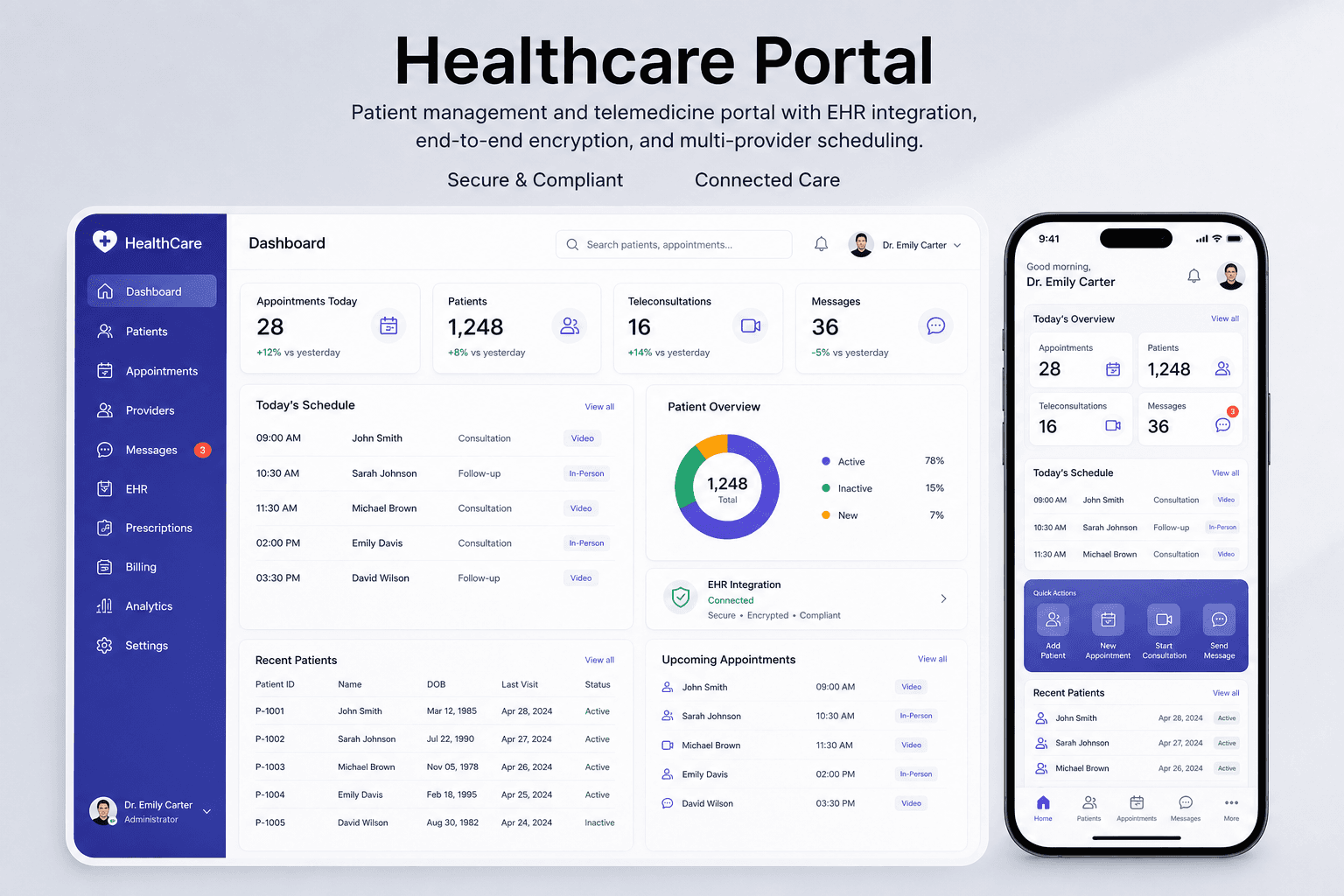
The objective was to develop a secure, scalable, and cloud-native Healthcare Management Platform that connects patients, doctors, hospitals, laboratories, pharmacies, and administrators through a unified digital ecosystem. The platform streamlines appointment scheduling, electronic health records (EHR), telemedicine, prescriptions, billing, laboratory management, and patient engagement while ensuring compliance with healthcare security and privacy standards.
Built using Node.js and a microservices architecture, the platform supports high availability, real-time communication, and seamless integration with third-party healthcare systems.
Business Challenges
Healthcare organizations often face challenges such as:
- Fragmented patient records
- Manual appointment scheduling
- Long patient wait times
- Limited telemedicine capabilities
- Inefficient prescription management
- Disconnected laboratory systems
- Complex billing and insurance workflows
- Strict regulatory compliance requirements
- Data security and privacy concerns
The goal was to create a centralized digital platform that improves patient care, operational efficiency, and clinical decision-making.
Solution
A modular microservices architecture was implemented, allowing each healthcare domain to operate independently while communicating through secure APIs and event-driven messaging.
Core services include:
- Authentication & Identity Service
- Patient Management Service
- Doctor Management Service
- Appointment Service
- Electronic Health Records (EHR)
- Telemedicine Service
- Laboratory Management
- Pharmacy Management
- Prescription Service
- Billing & Insurance Service
- Notification Service
- Medical Document Service
- Analytics & Reporting
- AI Assistant Service
- API Gateway
Technology Stack
Backend
- Node.js
- NestJS
- TypeScript
Frontend
- React.js
- Next.js
Database
- PostgreSQL
- Redis
- pgvector (AI knowledge search)
Communication
- gRPC
- RabbitMQ / Kafka
- REST APIs
Authentication
- JWT
- OAuth2
- Multi-Factor Authentication (MFA)
- Role-Based Access Control (RBAC)
Cloud & DevOps
- Docker
- Kubernetes
- Nginx
- GitHub Actions CI/CD
Monitoring
- Prometheus
- Grafana
- OpenTelemetry
- ELK/Loki
Platform Architecture
Web Portal / Mobile App
          │
      API Gateway
          │
──────────────────────────────────────
Authentication Service
Patient Service
Doctor Service
Appointment Service
EHR Service
Laboratory Service
Pharmacy Service
Prescription Service
Billing Service
Notification Service
Analytics Service
AI Assistant Service
──────────────────────────────────────
PostgreSQL
Redis
RabbitMQ / Kafka
Cloud Object Storage
Key Features
Patient Management
- Patient registration
- Digital health profiles
- Medical history
- Allergies and chronic conditions
- Emergency contacts
- Insurance information
Doctor Management
- Doctor profiles
- Department management
- Availability scheduling
- Consultation history
- Performance dashboards
Appointment Scheduling
Patients can:
- Search doctors by specialty
- Book appointments online
- Reschedule or cancel appointments
- Receive reminders
- Join virtual consultations
Electronic Health Records (EHR)
The platform maintains comprehensive digital medical records, including:
- Diagnoses
- Prescriptions
- Laboratory reports
- Imaging reports
- Vaccination history
- Clinical notes
- Treatment plans
Telemedicine
Supports secure online consultations with:
- Video and audio calls
- Secure chat
- Digital prescriptions
- File sharing
- Follow-up scheduling
Laboratory Management
- Test booking
- Sample tracking
- Result uploads
- Automated notifications
- Digital report downloads
Pharmacy Management
- Electronic prescriptions
- Medication inventory
- Refill requests
- Drug interaction checks
- Prescription history
Billing & Insurance
- Patient billing
- Insurance claim management
- Online payments
- Invoice generation
- Financial reporting
Notifications
Automated notifications via:
- SMS
- Push notifications
For:
- Appointment reminders
- Prescription updates
- Lab result availability
- Payment confirmations
- Follow-up visits
Security & Compliance
The platform prioritizes patient data protection through:
- End-to-end encryption
- JWT authentication
- Multi-Factor Authentication (MFA)
- Role-Based Access Control (RBAC)
- Audit logs
- Secure API access
- Encrypted data at rest and in transit
The architecture is designed to support compliance with healthcare privacy regulations such as HIPAA and GDPR, depending on deployment requirements.
AI Integration
An AI-powered healthcare assistant helps both patients and healthcare professionals.
Capabilities include:
- Symptom guidance (non-diagnostic)
- Hospital FAQs
- Appointment assistance
- Medical document search
- Clinical guideline lookup
- Internal knowledge base search using RAG
- Patient support chatbot
Technologies used:
- LangChain
- OpenAI GPT models
- PostgreSQL pgvector
- Markdown and JSON knowledge sources
Performance & Scalability
To support thousands of concurrent users:
- Redis caching
- Database indexing
- Connection pooling
- Event-driven processing
- Horizontal microservice scaling
- Background job queues
- CDN for static assets
CI/CD Pipeline
The development workflow includes:
- Feature branching
- Pull requests
- Automated testing
- Code quality checks
- Security scanning
- Docker image builds
- Continuous deployment
Business Benefits
The platform delivers significant operational improvements:
- Faster appointment scheduling
- Reduced administrative workload
- Improved patient engagement
- Centralized medical records
- Better collaboration among healthcare providers
- Secure digital consultations
- Scalable cloud infrastructure
- Enhanced reporting and analytics
- Improved patient satisfaction
Future Enhancements
Planned roadmap:
- AI-assisted clinical decision support
- Remote patient monitoring (IoT)
- Wearable device integration
- Predictive health analytics
- Voice-enabled medical assistant
- Medical image AI analysis
- Personalized patient care recommendations
- Population health dashboards
Conclusion
Using Node.js, NestJS, PostgreSQL, and a microservices architecture, the Healthcare Management Platform provides a secure, scalable, and future-ready foundation for digital healthcare. The modular design enables rapid innovation, seamless integration with healthcare systems, and AI-powered capabilities that enhance patient care, improve operational efficiency, and support long-term growth.
Tech Stack